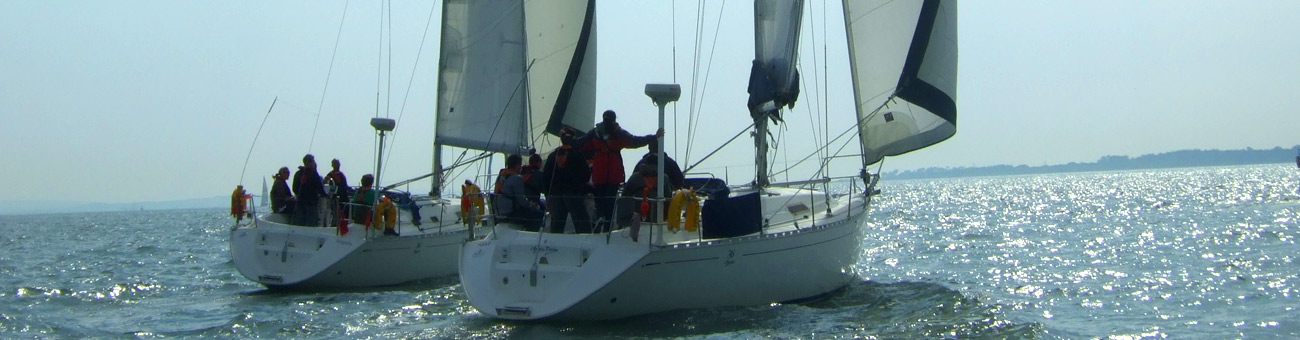
The Day Skipper course teaches pilotage, navigation, seamanship and boat handling up to the required standard to skipper a small cruising yacht safely by day in tidal waters with which the student is familiar.
1. Preparation for sea
- Is able to prepare a yacht for sea, including engine checks, selection of sails, securing and stowage of all gear on deck and below
2. Deck Work
- Can reef, shake out reefs and change sails to suit prevailing conditions
- Can prepare an anchor, mooring warps and take charge on deck when mooring alongside, coming to a buoy, anchoring, weighing anchor and slipping from a buoy or alongside berth
3. Navigation
- Is proficient in chartwork and routine navigational duties on passage including:
Taking and plotting visual fixes
Use of electronic navigation equipment for position fixing
- Use of waypoints
- Working up to DR and EP
- Estimating tidal heights and tidal streams
- Working out course to steer to allow for tidal stream, leeway and drift
- Knowledge of IALA buoyage
- Maintenance of navigational records
- Use of echo sounder and lead line
4. Pilotage
- Can prepare and execute a pilotage plan for entry into, or departure from, harbour
- Understands the use of leading and clearing lines
- Use of transits and surroundings as aids to pilotage
5. Meteorology
- Knows sources of forecast information
- Can interpret shipping forecasts and use a barometer as a forecasting aid
6. Rule of the road
- Has a working knowledge of the International Regulations for Preventing Collisions at Sea
7. Maintenance and repair work
- Understands and is able to carry out maintenance tasks
- Knows the properties and uses of common synthetic fibre ropes
8. Engines
- Knows how to change fuel and water filters, pump impeller and to bleed the fuel system
9. Victualling
- Understands how to victual a yacht
10. Emergency situations
- Is able to take correct action as skipper for recovery of man overboard
- Understands distress flares and how to use a liferaft
- Can operate a radiotelephone in an emergency and send a distress message
- Understands how to secure a tow
- Understands rescue procedures including helicopter rescue
11. Yacht handling under power
- Can bring a boat safely to and from an alongside berth, mooring buoy and anchor under various conditions of wind and tide
- Can steer and trim sails effectively on all points of sailing
12. Passage making
- Can plan and make a coastal passage, taking account of relevant navigational hazards and limitations imposed by the type of boat and the strength of the crew
13. Night cruising
- Has experienced sail cruising at night, including leaving and entering harbour.
- Understands the special consideration for pilotage plans, keeping a lookout and identifying marks by night.
14. Seasickness
- Working efficiency is unaffected/partially affected/severely affected by seasickness
15. Helmsmanship and sailing
- Understands the basic principles of sailing and can steer and trim sails on all points of sailing
- Can steer a compass course, under sail and power
16. General duties
- Has carried out general duties satisfactorily on deck and below decks in connection with the daily routine of the vessel