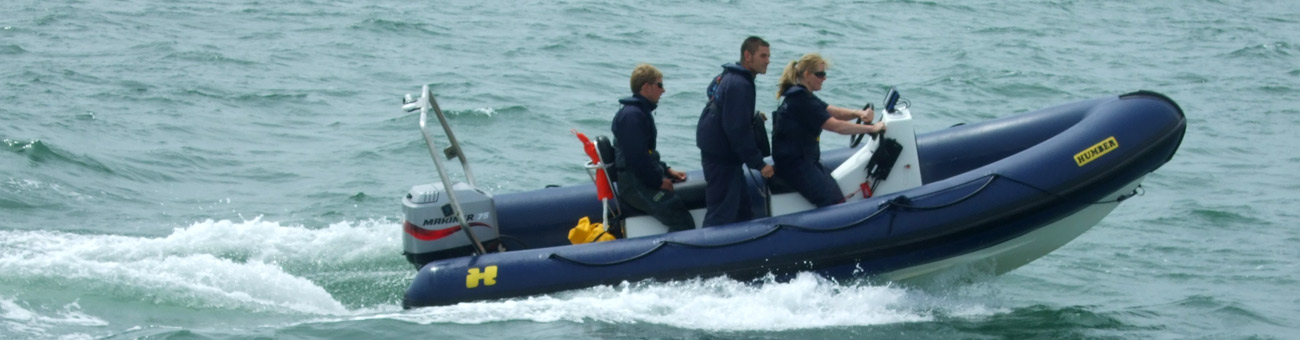
Launching and recovery
Use of a trailer or launching trolley
Consideration of launching and sea conditions, including hazards and obstructions
Number of persons required to launch/recover
Construction, width and condition of slipway
Steep/slippery slipways, beach launching, lee shores
Care of trailer bearings, hitch, lashings, ties, lights and winch
Trailer parking
Prepare the boat, lines, fenders, safety equipment, fuel tanks, lines and secure gear on board
Boat handling
Loading: effect on handling and performance, effect on balance and trim, CE Plate and manufacturer's recommendation
Displacement boats: handling ahead and astern, carrying way
Crew members: minimum number in high speed craft, keeping a look-out
Awareness of other water users, including effect of wash
Steering, controls, effect of current or tidal stream
High speed manoeuvring: planing, trim tabs and power trim
Planing boats: propeller angle and immersion, shallow drive, high/low speed handling, tiller/console steering
Carry out pre-start checks, engine starting and stoppping
Demonstrate the use of an appropriate length kill cord at all times
Carry out low speed manoeuvres including: turning in a confined area, effect of wind on bow and holding off. Demonstrate an awareness of the danger of flooding when going astern
Carry out high speed manoeuvres including S-turns and U-turns
Securing to a buoy
Preparation of mooring warp
Use of a boat hook
Method of approach
Crew communication
Making fast
Procedure when overshooting
Approach and secure to buoy
Anchoring
Method of approach in various conditions
Taking way off
Crew communication
Check holding
Depth of water, holding ground, scope required
Types of anchor
Stowage and attachment to boat
Preparation of anchor, chain and warp
Weighing anchor
Approach and anchor correctly
Weigh anchor correctly
Leaving and coming alongside
Preparation and use of painter, lines and fenders, attachement to boat, stowage under way
Speed and angle of approach
Wind effect
Method of approach in tidal stream or current
Make fast alongside
Use springs
Leave - ahead or astern
Man overboard
Recovery or man overboard
Take immediate action
Observe the man overboard
Carry out the correct return with awareness of propeller
Approach and recover the man in the water
Theory
Types of craft: advantages and disadvantages of different hull forms with respect to sea keeping ability
Engines and drives: advantages and disadvantages of outboard, inboard and outdrive units, single and twin screws, choice and use of fuels
Siting of fuel tanks, fuel lines, batteries, wiring, fire extinguishers
Routine engine maintenance checks, basic fault diagnosis
Close down procedure
Advice to inland drivers about coastal waters
Use and limitations of GPS
Application of local byelaws, especially around commercial shipping
Sources of weather information
Awareness of other water users
Communication with other craft - hand and sound signals
Disabled craft
Emergency action, preventing sinking
Adrift - alternative means or propulsion
Towing and being towed
Fire precautions and fire fighting
Ropework
Distress signals and the Mayday call
Apply IRPCS, principally rules 5,7,8,9,12-19
- Coastal
Pilotage and passage planning
CG66 Small Craft Safety Scheme
Charts, chart symbols, buoyage systems
Tides and tidal streams
Use steering and hand bearing compasses
Apply Section A on coastal waters